
TBNC / Journal · Volume 001
OBJECTS
Objects That Travel
The best objects do not stay new. They stay with you.
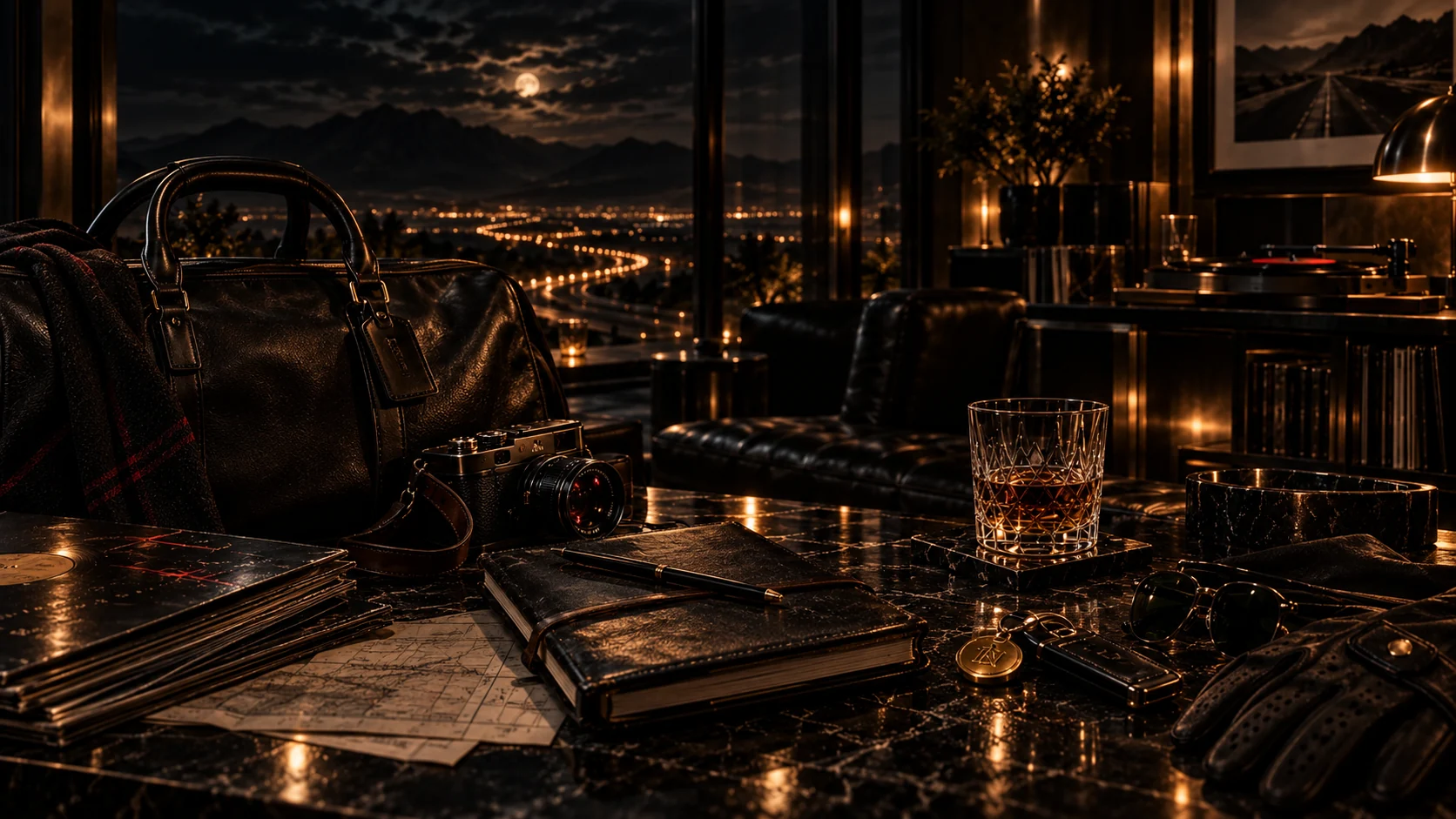
There are objects designed to be admired and objects designed to disappear into use. The rare ones do both. They look considered when they are new, then become more convincing after months or years of being handled, carried, dropped, repaired, folded, packed, and taken somewhere else.
A leather jacket is obvious because it records movement on its surface. So does a notebook. So does a camera body, a drum key, a guitar case, a watch strap, a pair of boots, a metal lighter, a road atlas, a pen that has lived in the same pocket for too long. Wear can be ugly, but honest wear has a different quality. It shows where a person touched the thing often enough to change it.
Modern products are frequently photographed at the moment before life begins. Perfect edges. No fingerprints. No scratches. No history. The image is seductive, but the object has not proven anything yet. A useful thing becomes interesting after the product shot would have been rejected.
Travel accelerates that process. Objects carried between rooms and cities lose their ceremonial distance. A notebook becomes a tray on a hotel desk. A jacket becomes a pillow at an airport. A key ring gathers another key. A case acquires a sticker, then loses half of it. Something designed in a studio begins answering to actual weather, actual hands, actual impatience.
Use is not what ruins a good object. Use is what finally gives it a biography.
This is not an argument for artificial distress. Manufactured damage is only another type of perfection. Real patina is specific. It appears where a thumb rests, where a buckle meets a surface, where a cable is repeatedly wrapped the same way, where a corner hits the floor. It is evidence of a relationship rather than a visual effect.
Music objects are especially good at this because sound demands repetition. Sticks become polished in the grip. Cymbals darken. Cases dent. Knobs lose their markings. Picks vanish. Cables remember the way someone coils them. The instrument itself may be expensive, but its value eventually becomes mixed with familiarity. The musician reaches for it without thinking because the object has become part of the body map.
The same principle applies outside music. The objects worth keeping are often the ones that ask less attention as they become more useful. They do not need to announce craftsmanship every time they enter a room. Their quality reveals itself through reliability, weight, balance, material, and the fact that replacing them feels unnecessarily disruptive.
Use is not what ruins a good object. Use is what finally gives it a biography. Newness can be purchased in an afternoon. History cannot. The things that travel with us long enough eventually stop being accessories. They become witnesses.