
TBNC / Journal · Volume 001
PLACES
After the Last Exit
There is a point where the signs thin out and the road starts sounding different.
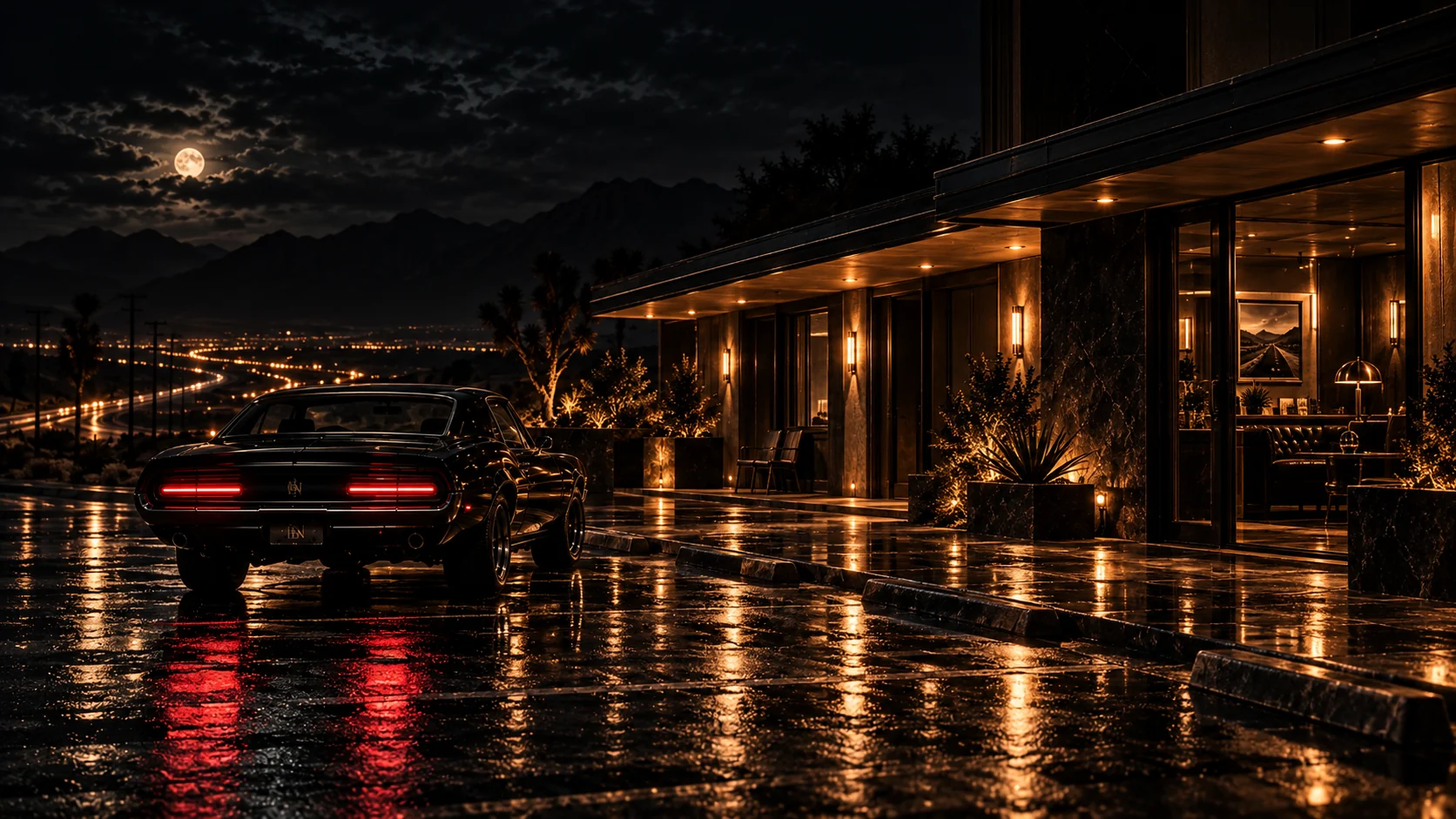
Every long road has a moment when commerce begins to lose interest. The exits get farther apart. Familiar logos disappear. Streetlights stop arriving in groups. A sign says there will be fuel again eventually, which is a very different message from there being fuel at the next intersection.
Past that point, small places gain disproportionate gravity. One diner can own ten miles of darkness. One motel can become the brightest structure in the valley. A gas station canopy visible from far away looks less like retail and more like architecture. Scale changes because there is nothing nearby competing for attention.
These places are often designed without any intention of becoming beautiful. Their beauty is produced by context. Fluorescent light against black desert. Red letters in rain. A vending machine humming beside a wall. A row of stools after midnight. The ordinary becomes cinematic because the surrounding world has gone quiet enough to frame it.
The word atmosphere gets overused because it is convenient. Real atmosphere is not a filter. It is a relationship between light, sound, temperature, distance, material, and timing. The same room at three in the afternoon and three in the morning is not the same room. The furniture has not moved, but the meaning has.
A place does not need to be famous to become unforgettable. It only needs to arrive at the right hour.
Roadside places understand this accidentally. They collect temporary people. Nobody fully belongs there. Everyone is between one state and another. A truck driver has twenty minutes. A family needs coffee. Someone is stretching after four hours in a car. Someone else is deciding whether to keep going. The room holds these lives without asking to become part of them.
That temporary quality can be strangely generous. A place with no history of you has no expectations of you either. You can sit, listen, look outside, and leave without maintaining a version of yourself for anyone in the room. It is a small anonymity, but sometimes that is enough to restore proportion.
This is why the last exit is not really about geography. It is the threshold after which familiar structure becomes less dense. It can happen on a highway, at the edge of a city, after the final train, on a hotel floor when every door is closed, or in a studio after everyone else has gone home.
A place does not need to be famous to become unforgettable. It only needs to arrive at the right hour. After the last exit, the world gets larger because there is less of it asking to be noticed.